
DEAL OF THE DAY

OUR EMAIL

Showing posts with label DOGS AND CATS. Show all posts
Showing posts with label DOGS AND CATS. Show all posts

PetsVentura Pets Day Care in Buenos Aires
Pets Day Care in San Isidro - Martinez
Daycare Hours: Monday-Friday 7am-6:30pm
Hourly USD$8 for the 1st hour and $4 for each additional hour.

Reservation only!
Tel: 54 (11) 5292-6001


Reservation only!
Tel: 54 (11) 5292-6001

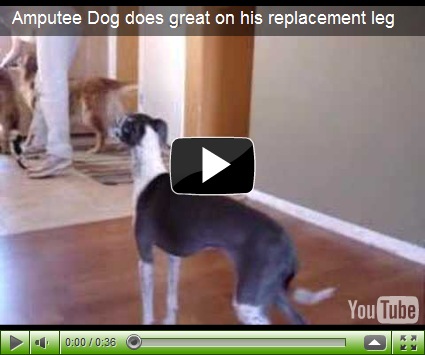
PROSTHESIS FOR DOG AND CATS
A dog or a cat that may need prosthesis is first evaluated to determine what kind of device is best. The dog is appraised using information about any deformity they may have, and the aspects specific to the injury if they received one. Their physical activities and living environment are also taken into consideration.
After the evaluation, a cast is made of the part of the body the prosthesis will be used for. The time it takes to manufacture a prosthetic device is typically about five to ten business days. The time can vary depending on which joints of the dog’s body need to be considered, as well as the type of prosthetic and the chosen material it will be manufactured from. As each dog is different, so is the device made for them.
Prosthetics are not intended to be worn 24/7; the dog will need a break from time to time. Because of the materials they’re made from, a prosthetic device will not change its shape or break down over time.
To ensure a good fit, the dog needs to use the prosthesis for several weeks. Owners need to watch the prominent bone involved and the dog’s hair and skin for any signs of wear, which will help to determine how well the prosthesis is fitting the dog.
By watching the dog use the prosthetic device on a daily basis during regular activities, owners can also determine if it is the proper device for their dog. Adjustments and repairs may need to be made from time to time to make sure the prosthesis keeps doing what it was constructed to do in the proper manner
There are several things to consider when looking into a prosthetic device for a dog or a cat. First and foremost is whether or not the pet would benefit from it both physically and emotionally, and is it in their best interest, or is it to assuage feelings of guilt you may have? Will it add fulfillment and quality to their daily life? The cost of the device and subsequent fittings should also be considered, and whether or not you can afford it.
For more information about PetsVentura Veterinary Services

Short-Nosed Dogs and Air Travel
 In July 2010, the U.S. Department of Transportation released statistics that showed short-nosed breeds of dogs—such as pugs, Boston Terriers, boxers, mastiffs, Pekingese, Lhasa Apsos, Shih Tzus and bulldogs—are more likely to die on airplanes than dogs with normal-length muzzles.
In fact, over the last 5 years, approximately one-half of the 122 dog deaths associated with airline flights involved these short-faced breeds. 25 of the 122 dogs that died over the 5-year period were English bulldogs, followed by 11 pugs, the only other breed in double digits. Although these numbers seem a bit scary, keep in mind that this is a very small number when compared to the hundreds of thousands of animals that fly every year.
As a result of the tighter space, they are prone to problems such as smaller-than-normal nostrils, a longer-than-normal soft palate, and a narrowed trachea (or windpipe).
Because of these abnormalities, they don't breathe as efficiently as dogs with normal-length snouts and can have difficulty cooling off when they're playing or exercising, or if they're stressed or overheated. And when they're stressed, their airway can actually collapse (either partially or completely) and cut off their airflow.
It's like breathing through a straw – if you gently suck through the straw, there's no problem getting air. But when you really try to suck hard through the straw, similar to what these dogs may do when they're stressed, exercising or overheating, the straw collapses and you don't get air. This doesn't always cause death, but it can cut off their oxygen supply temporarily and cause the dogs to collapse or overheat.
Because of their anatomical abnormalities, short-nosed breeds seem to be more vulnerable to changes in air quality and temperature in the cargo hold of a plane. Although pets are transported in pressurized cargo holds and get much the same air that the passengers in the cabin do, the air circulation might not be ideal for your pet's individual needs (and remember, your dog is in a crate that could also be affecting ventilation).
In addition, remember that there isn't anyone in that hold area that can monitor your pet and provide help if needed – so if there's a problem, you won't know until the plane has landed and your pet has been unloaded.
There are many things you can do, including:
Keep your pet healthy and at a normal weight. Pets with underlying medical conditions may be more likely to have problems during transport. Elderly and obese pets may also be at higher risk.
Getting your pet used to its traveling crate can really reduce stress while traveling. Think about it...when you're on a plane, you understand what's going on while taking off and landing or even when there's turbulence, but your pet doesn't know what's happening, and this can be stressful – and this can add to the stress your pet may already have if it's in a travel carrier for the first time.
If your pet is used to the travel crate, it's more likely to be comfortable in the crate and travel with less stress. And remember, ALL travel crates, regardless of the breed of dog being transported, need to be secure so your pet can't escape.
Although it can be comforting to your pet to have a familiar-smelling item in its travel crate, avoid thick blankets, fluffy towels or cloth items that your pet can wrap itself or bury its nose in – this could increase the risk of respiratory problems. A very thin blanket or flat newspaper is best for lining the crate.
If your dog is small enough to fit in a pet carrier that fits under the airline seat, and many popular brachycephalic breeds are, you can ask the airline to allow you to bring your pet into the passenger area of the plane with you. Do this when you make your reservation, not when you show up at the airport for your flight. Some airlines will allow this, but you should always ask about the airline's policy about pets in the passenger cabin.
The airline may charge an additional fee for pets in the cabin, and many airlines place limits on the number of pets allowed in the cabin.
In addition, airlines may have specific restrictions on the size of carriers allowed in the cabin as well as in the hold.
Some airlines may not allow certain breeds of dogs to be transported in the cargo holds of their planes, and airlines such as Continental Airlines also have embargo policies based on the size of the aircraft and the environmental conditions.
For example, an airline may refuse to allow short-nosed dogs to be transported in the hold during certain times of the year (due to environmental temperatures) or on certain flights (based on the size of the plane). Most of the embargo apply to animals transported in the hold, and do not apply to pets in the cabin
Pick your flight times carefully. When you and your pet are in the air, the pressure and temperature in the plane is controlled. However, you've probably noticed that the air seems a little stale and the temperature isn't as well regulated when you're sitting on the tarmac – that's because the plane's temperature and air pressure controls are often turned down until you're in the air.
What does this mean? Well, it means that if you're on the tarmac for a long period of time, the temperature in the cargo hold may rise above (if it's hot) or fall below (if it's cold) the ideal temperatures for your pet. To protect pet passengers, airlines have their own temperature restrictions—for example, no pets in the cargo bay when the forecast is 85 degrees (F) or higher—but you can be even more careful.
Try to minimize layovers where your pet might be kept in the cargo hold or sitting on the tarmac in temperatures that aren't comfortable for it. For example, in warmer months, or when you're traveling to a warm destination, only fly earlier or later in the day to avoid the mid-day high temperatures so the cargo area doesn't get uncomfortably hot. During cold weather, or when flying to a colder destination, try to fly during the warmer parts of the day.
Visit your veterinarian within 10 days before any interstate trip you take with your pet, but particularly before airplane trips. Pet owners are required by law to get a certificate of veterinary inspection (often called a health certificate) from their veterinarian for any trip that crosses state lines, and the airlines often require a copy of the health certificate before they'll let your pet fly.
If you have a short-nosed breed of dog, ask your veterinarian about your pet's respiratory health and what precautions you can take to minimize the risks for your pet.
Your veterinarian can help you figure our what kind and size travel carrier you should get and how best to mark it with your personal information to make sure you and your pet are reunited after the flight, what kind of animal identification is appropriate (such as tags, microchip, etc.), and when you should feed your pet during travel.
We strongly recommend that you avoid tranquilizing your pet for air travel, because it can increase your pet's risk of injury and health problems.
For more information:


Introduced compulsory microchipping
Jurisdictions that have introduced compulsory microchipping (such as New South Wales and Victoria in Australia) have found that there’s been a dramatic drop in the number of untraceable stray dogs, with  consequent huge financial savings for local authorities and animal charities.
In the New World of compulsory microchipping, this would happen every time a dog was found out on its own, and the local constabulary would give the careless owner something a little more formal and unpleasant than a sharp word from the local vet.
It's said again and again, but it’s so true: this problem is the fault of the humans, not the dogs. How do you make the humans responsible? Forge an unbreakable link between owner and dog with a microchip. If this government is serious about wanting to solve this problem, they should listen to those who work with dogs on a daily basis. Legislation to enforce compulsory microchipping and registration of all dogs should be introduced without delay.

Animal oxygen masks
Fire Department will have the means to revive pets that are suffering from smoke inhalation or carbon monoxide poisoning.
Losing a pet in a fire can add to the trauma of a family already having to deal with the fallout of the damage caused by a fire. While rescue personnel have oxygen masks meant for humans, these masks do not work well on animals because they do not fit well on their faces.
The cone-shaped masks, which are available in three sizes, can be fitted snugly on the animal's snouts, and have been found to be very effective in resuscitating pets suffering from inhaling smoke. Because of the various sizes they come in they can be used on different types and sizes of pet animals such as cats, dogs, rabbits, guinea pigs, ferrets, and even birds. These special oxygen masks are equipped with a rubber ring, which creates an effective seal, thus allowing pure oxygen to be pumped into the noses of the animal. The masks are simple to use as they only need to be placed over the snout of the animal, then hooked to an oxygen tank which forces oxygen into the animal. As long as the animal is breathing, these masks can be very effective.
NAMES FOR DOGS
 HERE ARE SOME NAMES WE COME ACROSS :
| Abril | Freddo | Nacho | Sali |
| Abby | Francis | Naomi | Sami |
| Amor | Gaby | Nati | Sasha |
| Alexia | Gipsy | Olivia | Shakira |
| Bachi | Goldie | Olga | Sofi |
| Bandit | Gus | Ozzy | Tango |
| Bayron | Hilari | Pati | Tito |
| Bianco | Harry | Peggy | Vito |
| Bimba | Kato | Pepsi | Vida |
| Blacki | Kino | Pixy | Vega |
| Casper | Laki | Pipe | Westy |
| César | Loco | Queen | Woly |
| Chapón | Lila | Quincy | Yupi |
| Che | Lula | Quira | Zeuz |
| Daffy | Lyra | Rasha | Zipi |
| Daiego | Maia | Roxy | Zippo |
| Deisy | Mara | Ruby | |
| Domino | Marley | Richi | |
| Fafi | Maxi | Rolfi | |
| Fidel | Milko | Rufiño |
Natural Reiki Healing For Animals
Reiki translates as universal life energy and is an amazing energy healing method that originated in Japan. It is offered as an alternative treatment in hospitals. While it has mainly been used for healing people, in more recent years, those who have learned Reiki have realized how beneficial this healing system could be to their own pets and other animals.

We thank Diana Glass, Master Reiki, for opening our eyes
![Reblog this post [with Zemanta]](https://lh3.googleusercontent.com/blogger_img_proxy/AEn0k_sErdq6XXpb6cpGBrindLXXTO6CX4U8pfk5Fez9ui3gjKWY0m8ynxr5d2FUfa52yxpWhSZekIwzAv9-0dCVgTz5RGseqFKb4nvaOjQkIvbPPc7MTWqTT8AyY_C3V-sNsGDiUH2c9Xa30suHZuFmJqAq=s0-d)
%5B3%5D.jpg "4_24 (17)")
- Because Reiki is healing energy, it will never harm you or your pet.
- It can be given to any type of animal.
- If your pet has emotional problems due to a traumatic situation such as abuse, neglect, or being hit by a car, Reiki can help release and heal those emotions.
- For behavioral issues such as nervousness or hyperactivity, Reiki can help your pet relax and reduce their stress and anxiety.
- If your pet is sick or injured, Reiki can help your pet heal more quickly. If your pet is facing a serious illness, Reiki can help bring comfort and be a great compliment to conventional treatment.
- If your beloved pet is dying, Reiki for animals can help bring peace and comfort to you and your pet during this difficult time. It really seems to help them relax so they are not afraid and struggling to stay a part of our lives.
We thank Diana Glass, Master Reiki, for opening our eyes
HONEY USE WITH ANIMALS
Treatment options other than antibiotics use on pets such as honey. Honey may be a safe, effective and affordable treatment option in many cases.

YOUR PET AND THE LAW
While you're alive, your dog is, legally, your property. Aside from the restrictions of cruelty laws, you can do almost anything you want with an animal you own: sell it, give it away, or have it humanely destroyed.
What about when you die? If your will directs the executor of your estate to have your dog humanely destroyed, and the executor or a local humane society doesn't object - quickly - the dog will be destroyed soon after your death.
If someone does object, the probate court, which oversees the administration of your estate, will rule on the validity of the will provision. Almost always, these provisions are found to be invalid, and the court may forbid the executor from carrying out your instructions. Courts have always frowned on wills that order the destruction of any kind of property, on the ground that it goes against public policy to needlessly destroy valuable property. (This prerogative, of course, isn't exercised logically or consistently: if it were, a court could intervene whenever an owner wanted a healthy pet killed, not just when the owner tries to do so from beyond the grave.)
Generally, the court's rationale is something like this: Someone leaves instructions in a will to destroy a dog because of the worry that the dog will not be cared for properly or will end up in a pound or somewhere worse. The owner wishes to prevent pain and suffering. So, if the dog is old and ill, or so attached to the owner that it couldn't adjust to a new home, the owner's request that it be humanely destroyed may make perfect sense. But if an executor has found a good home for a young, healthy animal, and the animal seems well adjusted and well taken care of, a court may decide that the previous owner's wishes are best fulfilled by not carrying out the will's order.
For example, a court faced with a will provision ordering the humane destruction of two healthy Irish setters concluded that the owner wouldn't really want them killed, because the dogs were happy and well cared for in a country home: "There is no lack of care. There is no reason for carrying out the literal provision of the will. That decedent [the deceased owner] would rather see her pets happy and healthy and alive than destroyed there can be no doubt."
One state legislature, moved to action by the public outcry over the impending death of Sido, a little mixed-breed dog that was being temporarily protected by the San Francisco SPCA, used the same rationale to pass a special law to save the dog's life. The legislature found that the dog's deceased owner, "having the best interests of her pet dog in mind, would not wish her instructions for the destruction of the pet dog carried out" if she knew how happy the dog was now. On the same day, a judge ruled that wills could not be used to destroy property.
Although courts rarely mention it, there is also overwhelming public opposition to carrying out such a will provision. It's hard to imagine a judge who wants to become famous for ordering the death of a happy, healthy pet that hundreds of families have offered to take in.
Many question the motives of dog owners who put such directions in their wills. Most pet owners who are truly worried about what will happen to their pets could arrange, if they tried hard enough, to have them go to loving homes. Obviously, there are exceptions: some dogs' attachment to one person is legendary, and such dogs can't be expected to adjust to new homes. The same goes for dogs that are incorrigibly bad-tempered around anyone outside the immediate family. And, of course, older dogs who are not in the best of health are not easy to place in new homes. But, unfortunately, there are times when using a will to order a healthy, normal pet to die when its owner does seems reminiscent of ancient rulers who had servants, wives, and animals buried with them.
![Reblog this post [with Zemanta]](https://lh3.googleusercontent.com/blogger_img_proxy/AEn0k_sjLI5GsYswT2cJb1ZnKsFy2ODbMj7i_Jod5OaHdKcrz1hfpdNQKppCt3rqQMd-VmP0sIAmbVz6E1nYX1c-LqgNA6_XV393tCyhhdO5D0yAGGag0gIfBExoBabQW2XJsy3I2TNv1I7UyLY3cOvF5wPS=s0-d)
Masticatory Muscle Myositis
 Ginger had been a completely normal puppy, playing
 enthusiastically, and eating hungrily. Over a twelve-hour period, everything changed. She became dull and quiet, no longer wanting to play, and she stopped eating. When her owner reached out his hand to pet her head and reassure her, she backed away, and yelped as if in pain.
Ginger was brought in to see me at once. She sat on the consulting table, looking miserable. She wouldn’t let me open her mouth at all. Was there something stuck inside her mouth? I admitted her to investigate and to my surprise, even after I’d given her a general anaesthetic, I was unable to open her mouth more than one inch wide. I took x-ray pictures of her skull to see if there was some type of abnormality or injury but everything was normal.
I processed blood samples in our laboratory, but again everything was normal. I telephoned a local referral clinic to discuss the case, wondering if specialised tests such as “electromyography” (EMG) might be available. These tests are common in the human world, using electrical recording apparatus to assess the function of different muscle groups but they’re rarely used in the veterinary world. The referral clinic was very helpful: they were not running EMGs, but they had come across a case report that could be relevant.
I processed blood samples in our laboratory, but again everything was normal. I telephoned a local referral clinic to discuss the case, wondering if specialised tests such as “electromyography” (EMG) might be available. These tests are common in the human world, using electrical recording apparatus to assess the function of different muscle groups but they’re rarely used in the veterinary world. The referral clinic was very helpful: they were not running EMGs, but they had come across a case report that could be relevant.
The report described three Cavalier King Charles Spaniel puppies that had developed severe jaw pain, just like Ginger. Full investigations – including electrical tests and muscle biopsies – had proven that the puppies were suffering from a condition known as Masticatory Muscle Myositis. This rare condition happens when the body develops an immune reaction to its own muscle fibres. The muscle fibres around the jaws are “rejected”, in the same way as a new kidney can be rejected after a kidney transplant. As a result, the muscles become swollen and painful. Once the condition is diagnosed, it can be effectively treated by giving drugs to suppress the immune system.
I sent an email to a specialised veterinary neuromuscular centre in San Diego at once, explaining Ginger’s background. Their reply was encouraging. They regularly saw small numbers of Cavalier puppies with this problem, and they had developed a special antibody test that could be used to confirm the diagnosis without the need for complicated workups or muscle biopsies. If I could send them a small blood sample from Ginger, they’d be able to confirm the diagnosis. I did this at once.
While we waited for results, I gave Ginger strong pain relief, and whilst this did not solve the problem, it did ease her signs so that she started to eat
again.
Two weeks later, the results from the Californian blood tests arrived, and they confirmed the diagnosis. Ginger was definitely suffering from Masticatory Muscle Myositis. I started her onto a high level of immunosuppressive drugs to stop her body from rejecting her own jaw muscles. She responded well immediately, and she has been more-or-less pain-free since the drugs were started.
Ginger still has problems: her head muscles have been scarred, and she is unable to open her mouth as fully as she should. Her tongue lolls out of her mouth in a strange way, and she is smaller than other puppies of her age. She’ll never be the same as her brothers and sisters, but thanks to the help of modern medicine, she’s well enough to live a reasonably normal life.
![Reblog this post [with Zemanta]](https://lh3.googleusercontent.com/blogger_img_proxy/AEn0k_ua8_1dgcnVFyDMqCh1bqwnLep1RUPywyJ61d8JokRoI3bbzn5vjfOJTn43d4O6RUx2ek_5C7dqsd3ctkuZQtM28HZw6C5bDC3DELmBZt81luhs3FbuBdFGbaflsrIaiDJCZa-3UsLiK6zNoQdWwA2t=s0-d)

PetsVentura Home-made Dog Biscuits
Ingredients
1 kg flour
1 kg mielie (maize) meal
3 stock cubes dissolved in 2 liters of water
3 tsp. salt
1 cup of beef dripping
Method
Mix ingredients together well to make a stiff dough.
Roll the dough onto two baking sheets; score into squares with a knife and place in a moderate oven.
After an hour remove outer rows that have hardened, separate other biscuits and return to the oven for about half an hour.
Any remaining biscuits that are still not quite hard can be left in the oven to dry a little while longer.
Honda introduced Dog-Friendly Car
At the New York Auto Show, Honda introduced a new concept version of the dog-friendly Element that is designed to push the SUV ahead of the DogCar pack.

Stop Your Dog From Barking
Most dogs have no indication as to whether barking is something good or something bad. Dogs have a natural instinct to protector what they believe is their territory. They consider it their obligation to notify other pack members (which include you and your family) of intruders. Without a doubt many people value their dog’s capacity to warn them of people entering their premises. However this dog barking can often be excessive and become a irritant to you and your neighbors.
There are different methods to handle excessive dog barking:
- Barking is OK until the dog is told to "Stop Barking." Each time your dog barks, after two or three barking, praise your dog for sounding the alarm. Then order your dog, "Stop Barking." At the same time, you can provide your dog especially tasty food treat in front of its nose. Praise her continuously "Good girl, stop barking, what a good quiet dog you are, good dog . . ." After 3 seconds of no barking, let her have the treat. The next time she barks, require her to stop barking for 5 seconds before she gets the treat. Each time she is told to stop barking and succeeds, she will be rewarded. Within a single training session, you can teach your dog to stop barking for up to 1 or 2 minutes. This is major progress, because whatever set off her barking in the first place is history, and she is likely to be quiet until the next disturbance.
- Sometimes a spray of water in the face will do the trick. You must find something that will immediately make your dog stop barking. As soon as your dog stops barking, even for just a tenth of a second, you must immediately and instantly reward her. After adequate repetitions your dog will learn the meaning of the command, "Stop Barking," and you will no longer need your training props (water, treats, etc.)

If your dog's excessive barking has already become a routine, don't expect the barking to get under control at once. It takes weeks of repetition to replace an old habit with a new one. Instead of barking relentlessly at the insignificant, your dog will be barking appropriately and for a logical length of time. It is important that you maintain this new good habit through practice and praise or your dog may revive his old annoying barking habits again.
© Jim Anderson
Peru offers national hairless dog to President-elect Barack
LIMA, Peru — Completely bald and older than the Incas, the Peruvian hairless dog seems like an odd fit for the White House.

The Friends of the Peruvian Hairless Dog Association responded on Monday, sending a letter to the U.S. Embassy in Peru offering the Obama family a 4-month-old pup that responds to “Machu Picchu,” the name of Peru’s famed Inca citadel.
They were kept as pets during the Inca empire and depictions of the breed appear in 1,200-year-old, pre-Inca artwork.
The hairless dog was long scorned for its appearance before it was recognized internationally as the official Peruvian dog.
TEA TREE OIL – MELALEUCA – USE WITH DOGS AND CATS

With smaller dogs, miniature breeds like small poodles, Chihuahua's, and felines; you should avoid shampoos with concentrations of tea tree oil or other essential oils like menthol, in concentrations greater than 1%.
Cats and small dogs are highly at risk to central nervous system depressants (CNS depression) like some essential oils.
Never use directly tea tree oil, mint, or pennyroyal essential oils on any small animal.
Although some of these oils have proven themselves effective in repelling fleas and ticks, they can be dangerous or deadly to your small pets.
Subscribe to:
Posts (Atom)


