Google+ PetsVentura® : TRAVEL WITH CATS
Showing posts with label TRAVEL WITH CATS. Show all posts

TRANSPORTING EXPORTING A DOG OR A CAT


Most frequently asked questions during the exporting process!


1 Q: What do I need to do to send my dog/cat overseas?
A: You first need to contact the Government of the country you want your dog/cat to go to and ask if you need to apply for an import permit or if there are any other requirements needed.

2 Q: How soon can I make a booking to fly my Dog/Cat?A: Normally the airlines will accept bookings approximately two weeks before the date you need your dog /cat to fly. We recommen not delaying your booking to last moment.

3 Q: What happens if I need to leave Argentina urgently? Can you look after my Dog/Cat before you send them to where I go?
A: Yes, we can offer domestic boarding for your Dog/Cat before sending to your country. We have an on site vet who can do any vaccinations required for. Please check that your dog/cat vaccinations are up to date. If you want to know what vaccinations are required please contact us.

4 Q: When should I purchase the crate for my Dog/Cat?
A: We would suggest you purchase the crate approximately one month before flying, to get your Dog/Cat used to it, so on the day of flying it is not totally unfamiliar. You will find that if you just put the Dog/Cat in the crate on the day of flying they will be very upset and frightened.

5 Q: Should I tranquilize my Dog/Cat before flying?
A: We do not recommend that you tranquilize your dog / cat before travel. If you feel your dog/cat needs to be calmed down then you could use a natural alternative.

6 Q: What can I do to prepare my Dog/Cat for travel?
A: You can help prepare your Dog/Cat for travel by slowly introducing them to strange environments (especially dogs). For example: go near wherever there is a lot of activity and loud noise. If you can make your dog/cat familiar with his/her travel crate by feeding them inside it, as well as slowly getting him/her to sleep in it, then when the big day comes they will not stress so much.

7 Q: I know you do grooming can you cut my dog's hair before leaving?
A: Yes we can We have on site Master Groomer that will bath and provide haircut to meet your pets’ needs.

8 Q: What size Travel crate will my Dog/Cat need?
A: The travel crate must be large enough for your Dog/Cat to be able to stand completely upright, turn around and lie down.

9 Q: How do I measure my Dog/Cat for the travel crate?
A: Measure your dog from the top of the head to the when standing up straight. Then you should measure from the tip of the nose to the base of the tail (top of the bottom), and across the chest. Cats do not normally need to be measured, unless exceptionally large. Please also tell us the weight of your dog/cat. If you give us the wrong measurements and the crate is too small for your dog/cat then you will need to pay more money as the airline charges by VOLUME METRIC WEIGHT and the new bigger crate will increase your airfare. IF YOU ARE GIVEN A QUOTE BY ANOTHER SHIPPER AND YOU WISH TO COMPARE WITH OUR QUOTE PLEASE CHECK THEY HAVE QUOTED YOU USING THE SAME CRATE SIZE AS US.


10 Q: Can I provide my own travel crate?
A: Yes you can provide your own travel crate and this will reduce the quote, but it must be International Air Transport Association approved. If we provide the travel crate, we can be sure it is airline approved and of adequate size, with suitable water bowl, funnel and labels attached.

https://www.bestdogcrates.net/impact-case-cage-review/

11 Q: What vaccinations are required?
A: In addition to the vaccinations that may be required by the Government of the country your Dog/Cat will be entering; you will also need to ensure your annual vaccinations are up-to-date. Please note: a Rabies vaccination may also be required. All reputable Kennels will insist on these vaccinations in case your dog/cat needs to board overnight or has to stay in a transit facility overseas.

12 Q: Does my Dog/Cat need to have a Rabies vaccination before going to another country?
A: All countries are different and a Rabies vaccination is not required for entry into all. When you have the Import Health Standards for the country you are moving to, it will state whether you need a Rabies vaccination or not.

13 Q: What should I put in the crate for my Dog/Cat?
A: You will need to put something of yours in the crate for example a towel or a T-shirt that has your smell on it. Another good idea is to put a chew toy which can keep your Dog/Cat busy on their long journey. We will put in the newspaper and ensure there are two water bowls, a funnel and appropriate labels which meet the airline regulations.

14 Q: Can you put the choker chain, collar and lead in the crate with my dog/cat?
A: For safety reasons never leave a lead, harness or collar on your Dog/Cat when they are travelling.

15 Q: How can I collect my Dog/Cat?
A: We will give you an Airway Bill Number which becomes your dog/cat's ticket number. On arrival into the country you are travelling to, ask someone to direct you to the Cargo section of the airline you have used, or their agent in that country. They will ask you to give them the Air Way Bill number, and to clear Customs for your Dog/Cat. They will charge you for doing this. Make sure you collect all documentation including vaccination cards when you pick up your dog/cat in case you need to travel overseas again.

We can arrange for a pet shipper in the country you are going to, to clear Customs and pick up your dog/cat for you, which will take the stress off.


If you need any further help, please contact our transport department TEL: (5411) 5292-6001

Take Your Pet With You To Latin America

PET FRIENDLY ACCOMMODATION

ARE YOU AN HOTEL MANAGER? 

Offering Pet Friendly Accommodation In Latin America?

Pet friendly hotels, motels and B&B are welcome to join PetsVentura Pet Travel Agency' List of Certified Pet Friendly Accommodation 


Call us for more information at:

+54 (11) 5292-6001 (Argentina) 
1 (818) 827-6256 (USA)


Pet in cargo hold

When you send your pet by cargo flight you might wonder where the kennel is placed at the airplane. 

I attached to this short note a picture to demonstrate the place in cargo hold. All kennels are secured in an area designated for live an
imals, away from the other baggage and cargo. Kennels are either strapped down individually or otherwise secured with tarp or netting.


The air in the cargo hold is the exact same pressurized, temperature-controlled air that circulates throughout the main cabin. But because the multitude of human bodies sitting together generates added warmth in the more insulated main cabin, the air is always cooler in cargo. To remedy this, most aircrafts have a “high/low” switch in the cockpit that sends additional warm air to cargo, which the pilot sets to “high” whenever there are live animals below. One pilot states that on a Boeing 777, the cargo air averages about 18°C (64.4° F) with the switch set to high, but can drop to below 10 °C (50°F) if mistakenly left on the low setting.

To help prevent such an accident, all pilots are informed on their load manifest when there are live animals “in the pit.” For caution’s sake, it would be wise to ask your flight attendant to confirm the pilot has “flipped the switch” and is aware of your precious cargo below!

PetsVentura Pet Relocation Solutions can assist you with all your questions regards to travel with pets.


International Pet Relocation Quotes


When you and your family decide to move with your pet/s, PetsVentura Pet Relocation Solutions ® know how stressful it can be to arrange all the logistics and with pets, it is even more distressing. This is where we step in. We take on all the logistics involved with relocating your pets, as there are often many steps involved, and we handle it all for you.

PetsVentura Pet Relocation Solutions ®  will asses, which paperwork is needed for the country you are moving to, and we will get in touch with agents on that side, if necessary. We will obtain the health certificate in due time (each country has a different time stipulation). We will find the safest and fastest flight plan for your pets, so that they have to endure as little stress as possible. We will also always seek the most economical flight schedule, when possible. We make sure the travel box sizes are appropriate according to IATA regulations, in order for the pets to have enough room for travelling and to secure that there will be no hold–ups during travelling.

PetsVentura Pet Relocation Solutions ® will collect the travel kennel in advance, so we may prepare them before your pet needs to travel, making sure all the necessary paperwork is attached securely and that your pet can travel safe and with as much comfort ability as possible.

Your PetsVentura Pet Relocation Solutions ® agent will personally take your pets to the airport to check them in for their flight. The same   agent will further follow your pet’s progress on their journey to their final destination, will give you updates and we do not stop chasing and we do not “close” until we know for certain, that the kids are happily reunited with their family.

To provide you a quote, please provide the following details:

- Pet details including health status
- Estimated departure date
- Size of travel box (height, width and length)
- Final destination point
- Weight of pet in the travel box with a blanket
- Vaccination status


We will provide you with a quote in within 72 hours and we will advise you on your options of how to proceed.
PetsVentura Pet Relocation Solutions ® understand the anxieties, that you may have and that your pet might incur and we are here to assist you and yours in any way we can. Just contact us with your questions, and we will get back to you immediately to help you.


PetsVentura Pet Relocation Solutions ® will provide as much or as little aid, as your relocation may require and only charge you accordingly.
We think it is fantastic and we are truly thankful, when families who have decided on relocating, naturally include their family pet /s.


Click on the logo to get a quote:

TRASLADOS DE MASCOTAS

El traslado de sus bienes, podría incluir a miembros muy especiales: sus mascotas. Por eso PetsVentura Pet Relocation Solutions ofrece un servicio especializado para su transporte, que incluye no sólo los trámites esenciales para su retiro del país, sino también la selección del medio de transporte y de jaulas diseñadas para tal fin.

Un resumen de nuestros servicios puede ser el siguiente:

Planificación del traslado de la mascota

Provisión anticipada de la jaula por IATA.

Realización de tramites aduaneros.

Servicio de canil.

Flete aéreo.

Acompañamiento de la mascota.

Recepción de la mascota en destino, entrega en su residencia.

Para exportar animales (perros y gatos) desde Argentina al exterior es necesario presentar:
Certificado de Vacunas y de Salud emitido por su veterinario. 

Certificado de Salud, emitido por el SENASA. Este trámite lo realiza PetsVentura Pet Relocation Solutions 

Adicionalmente, para algunos países es necesario visar ante el consulado este Certificado de Salud del SENASA. Asimismo, en otros países es necesario que los animales pasen por cuarentena.

Importante: En el caso de animales (perros y gatos) que ingresan a los países de la Comunidad Europea, deberán cumplir con lo siguiente:

Microchip de identificación, implantado en la mascota. 

Vacuna contra la rabia colocada el mismo día en que se implanta el chip (independiente de otras vacunas que sean necesarias). 

28 días después de la vacunación y el implante del chip, se toma una muestra para comprobar el Suero Antirrábico y se envía a un laboratorio certificado.

A partir de ese momento y contando 90 días, las mascotas podrán ingresar a países miembros de la Comunidad Europea y Suiza.


Transporte de mascotas a todo el Mundo

Transporte de mascotas a todo el Mundo, hacemos traslado de animales vivos en todo el interior del Pais, gestionamos tramites como lazaretos, consulados, senasa.


Disponemos de mas de 8 modelos de cajas y jaulas transportadoras para perros y gatos en venta , bebederos de goteo aprobados por I.A.T.A, homologados por la Union Europea.


Tambien contamos con nuestro servicio de pensionado canino y felino durante todo el año.


Para mayor información puede contactarnos por:


Costa Rica Import Permit

Most of the government offices in Costa Rica close for the week between Christmas and New Years and many take an extended vacation beginning the 18th of December and not ending until after the 3rd of January.


If you are trying to import a pet you will find that this rule applies to you and the offices that you need to be opened to facilitate your need for an import permit. While some offices will be opened on a skeleton crew they will not be issuing import permits during this time and will only resume this practice after the 3rd of January.


Pets can still leave the country but should not try to enter the country by the proper means or they risk being held by the customs officials for an unlimited period of time.

Short-Nosed Dogs and Air Travel


In July 2010, the U.S. Department of Transportation released statistics that showed short-nosed breeds of dogs—such as pugs, Boston Terriers, boxers, mastiffs, Pekingese, Lhasa Apsos, Shih Tzus and bulldogs—are more likely to die on airplanes than dogs with normal-length muzzles.

 In fact, over the last 5 years, approximately one-half of the 122 dog deaths associated with airline flights involved these short-faced breeds. 25 of the 122 dogs that died over the 5-year period were English bulldogs, followed by 11 pugs, the only other breed in double digits. Although these numbers seem a bit scary, keep in mind that this is a very small number when compared to the hundreds of thousands of animals that fly every year.

As a result of the tighter space, they are prone to problems such as smaller-than-normal nostrils, a longer-than-normal soft palate, and a narrowed trachea (or windpipe).

Because of these abnormalities, they don't breathe as efficiently as dogs with normal-length snouts and can have difficulty cooling off when they're playing or exercising, or if they're stressed or overheated. And when they're stressed, their airway can actually collapse (either partially or completely) and cut off their airflow.

It's like breathing through a straw – if you gently suck through the straw, there's no problem getting air. But when you really try to suck hard through the straw, similar to what these dogs may do when they're stressed, exercising or overheating, the straw collapses and you don't get air. This doesn't always cause death, but it can cut off their oxygen supply temporarily and cause the dogs to collapse or overheat.

Because of their anatomical abnormalities, short-nosed breeds seem to be more vulnerable to changes in air quality and temperature in the cargo hold of a plane. Although pets are transported in pressurized cargo holds and get much the same air that the passengers in the cabin do, the air circulation might not be ideal for your pet's individual needs (and remember, your dog is in a crate that could also be affecting ventilation).

In addition, remember that there isn't anyone in that hold area that can monitor your pet and provide help if needed – so if there's a problem, you won't know until the plane has landed and your pet has been unloaded.

There are many things you can do, including:

Keep your pet healthy and at a normal weight. Pets with underlying medical conditions may be more likely to have problems during transport. Elderly and obese pets may also be at higher risk.

Getting your pet used to its traveling crate can really reduce stress while traveling. Think about it...when you're on a plane, you understand what's going on while taking off and landing or even when there's turbulence, but your pet doesn't know what's happening, and this can be stressful – and this can add to the stress your pet may already have if it's in a travel carrier for the first time.

If your pet is used to the travel crate, it's more likely to be comfortable in the crate and travel with less stress. And remember, ALL travel crates, regardless of the breed of dog being transported, need to be secure so your pet can't escape.

Although it can be comforting to your pet to have a familiar-smelling item in its travel crate, avoid thick blankets, fluffy towels or cloth items that your pet can wrap itself or bury its nose in – this could increase the risk of respiratory problems. A very thin blanket or flat newspaper is best for lining the crate.
If your dog is small enough to fit in a pet carrier that fits under the airline seat, and many popular brachycephalic breeds are, you can ask the airline to allow you to bring your pet into the passenger area of the plane with you. Do this when you make your reservation, not when you show up at the airport for your flight. Some airlines will allow this, but you should always ask about the airline's policy about pets in the passenger cabin.

The airline may charge an additional fee for pets in the cabin, and many airlines place limits on the number of pets allowed in the cabin. 

In addition, airlines may have specific restrictions on the size of carriers allowed in the cabin as well as in the hold. 

Some airlines may not allow certain breeds of dogs to be transported in the cargo holds of their planes, and airlines such as Continental Airlines also have embargo policies based on the size of the aircraft and the environmental conditions.

For example, an airline may refuse to allow short-nosed dogs to be transported in the hold during certain times of the year (due to environmental temperatures) or on certain flights (based on the size of the plane). Most of the embargo apply to animals transported in the hold, and do not apply to pets in the cabin

Pick your flight times carefully. When you and your pet are in the air, the pressure and temperature in the plane is controlled. However, you've probably noticed that the air seems a little stale and the temperature isn't as well regulated when you're sitting on the tarmac – that's because the plane's temperature and air pressure controls are often turned down until you're in the air.

What does this mean? Well, it means that if you're on the tarmac for a long period of time, the temperature in the cargo hold may rise above (if it's hot) or fall below (if it's cold) the ideal temperatures for your pet. To protect pet passengers, airlines have their own temperature restrictions—for example, no pets in the cargo bay when the forecast is 85 degrees (F) or higher—but you can be even more careful.

Try to minimize layovers where your pet might be kept in the cargo hold or sitting on the tarmac in temperatures that aren't comfortable for it. For example, in warmer months, or when you're traveling to a warm destination, only fly earlier or later in the day to avoid the mid-day high temperatures so the cargo area doesn't get uncomfortably hot. During cold weather, or when flying to a colder destination, try to fly during the warmer parts of the day.

Visit your veterinarian within 10 days before any interstate trip you take with your pet, but particularly before airplane trips. Pet owners are required by law to get a certificate of veterinary inspection (often called a health certificate) from their veterinarian for any trip that crosses state lines, and the airlines often require a copy of the health certificate before they'll let your pet fly.

If you have a short-nosed breed of dog, ask your veterinarian about your pet's respiratory health and what precautions you can take to minimize the risks for your pet.

Your veterinarian can help you figure our what kind and size travel carrier you should get and how best to mark it with your personal information to make sure you and your pet are reunited after the flight, what kind of animal identification is appropriate (such as tags, microchip, etc.), and when you should feed your pet during travel. 

    We strongly recommend that you avoid tranquilizing your pet for air travel, because it can increase your pet's risk of injury and health problems.


For more information:
contact us
Enhanced by Zemanta

Travelling in Europe with a Pet


Traveling with a cat or dog is now much easier with the new EU pet passport
The requirements:
Traveling with a cat or dog is now much easier with the new EU pet passport available from any veterinarian in Europe. The national authorities in every EU country are responsible for issuing the passport to the vets . All cats and dogs must have a passport containing details of a valid rabies vaccination. Until the end of 2011, Ireland, Malta, Sweden and the United Kingdom also require proof that the vaccination has been effective.
Pet_Passport


In addition, and also until the end of 2011, treatment for ticks and tapeworm is required for entry into Ireland, Malta and the United Kingdom. Finland and Sweden require a tapeworm treatment.
An animal has to be identified by an electronic microchip. A clearly readable tattoo is also acceptable until 3 July 2011, except if you are taking your animal to Ireland, Malta and the United Kingdom where a microchip is already required.
Young pets which cannot be vaccinated yet may be allowed to travel without vaccination on the conditions defined by each Member State.
For the entry of animals into Ireland, Sweden, Malta or the United Kingdom, antibody titration (a test to see if the vaccine has been effective) needs to be carried out after the vaccination.
The EU pet passport has been designed to last for the lifetime of the animal bearing it. When travelling, the pet owner must ensure that the rabies vaccination in the passport is valid or renew the pet's vaccination.
Some Member States might also choose to include additional information in the passport about other vaccinations and the animal's medical history to make veterinary checks easier, but this additional information is not required by EU law.
The EU pet passport makes veterinary checks easier and make life easier for travelling pet owners, since there is one single system that applies for all EU countries (with some temporary exceptions for the UK, Ireland, Malta and Sweden).

If you are travelling to or from one of the neighboring countries where the rabies status matches that of the EU. This includes: Andorra, Iceland, Liechtenstein, Monaco, Norway, San Marino, Switzerland and the Vatican City State.

For more information free to contact us:
contact us
Enhanced by Zemanta

FLIGHT TRACKING

Do you want to take your family Pet away with you?Do you ship your pet by Cargo?

Tracking the status of your pet shipping can be done by using real-time system

Flight Tracking


Driving With Dogs Can Be Dangerous

About two-thirds of dog owners surveyed by the AAA organization said they routinely drive while petting or playing with their dogs, sometimes even giving them food or water while maneuvering through traffic.
It has been a common sight for many years to see dogs hanging their heads out of open car windows with their ears flapping in the breeze. But in the cocoon that the automobile has become, more drivers are nonchalantly cradling their dogs atop their laps or perching the animals on their chests with the pet's front paws clutching the driver's neck or shoulders.


It's risky behavior for the driver and dangerous for the pets, too.
An 80-pound dog unrestrained during a crash at 30 mph exerts 2,400 pounds of force in a vehicle, creating a danger for the dog and anyone in its path, according to Motivation Design LLC.
Most drivers don't realize that a dog moving around a vehicle or sitting on someone's lap can injure or kill occupants during a crash, particularly if air bags deploy.
If the animal is sitting between the steering wheel and the driver, the air bag will throw the animal back at you with great force.
unknown
DRIVE SAFE!
BUCKLE YOUR PET!

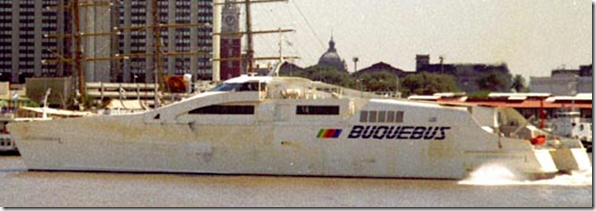
Taking the Buquebus Ferry from Buenos Aires, Argentina to Uruguay with your pets


PETS: DOGS CATS AND BIRDS


Buquebus (BOO-kay-boos) is the name of company which operates ferry services from Montevideo and Colonia to Buenos Aires.

Buquebus ferries run daily between Buenos Aires and two Uruguay destinations: Colonia and Montevideo. Colonia is a small historic town with cobblestone streets and restored buildings. Montevideo is the capital of Uruguay. The trip between Buenos Aires and Colonia takes 3 hours on the regular ferry or just 1 hour on the fast ferry. The trip to Montevideo takes 3 hours on the fast ferry

PETC (pet in cabin), it is allowed one per trip, which also does not exceed 6kgs including the kennel. Kennel measures: it should be of rigid material, with ventilation, impermeable base and its measures: 45x35x25 

The company does not provide the kennel. Pet`s bag will not be accepted!
Guided dogs: They travel in the cabin without the kennel and they travel freely, showing previously the training and vaccination certificate 

Important: all the animals have to present document of sales reservation, health certification, issued by the competent authority of each country.


Picture0002

How to avoid quarantine when travelling with a pet


PetsVentura Pet Relocation Solutions provides a legal alternative for pet quarantine that will reduce or remove the need to place your pets into a quarantine facility.

PetsVentura is qualifying by Argentina in providing Alternative Pet Quarantine that will qualify your pet as an Argentinian resident. Our service may significantly reduce - or remove, as a consequence – the need of quarantine upon arrival for pets entering those countries which require quarantine, added with the complete importation requirements.

PetsVentura offer a real alternative that is fun, stress free and flexible enough to allow owners to arrange care for their pets to suit their pet’s needs.

Your pet will stay with our family in a home-base environment and will never be caged. We offering 24/7 veterinary supervision and integration with other pets and people.


Should you be in Argentina during your pet’s stay with PetsVentura, you are welcome to visit with your pet with preapprove appointments.

We ask the client to pay for the stay depends on the length of time, food, and medical care if needed.


PetsVentura can provide you a full range of relocation services


How safe is it to ship my pet by air?


A letter written by Senators Robert Menendez (D-N.J.), Richard Durbin (D-Ill.) and Joseph Lieberman (I-Conn.) calling on Secretary of Transportation Ray LaHood to review current regulations concerning the reporting of animal deaths on commercial airlines:

"While concerns about the reporting of pet fatalities voiced by Senators Menendez, Durbin and Lieberman are valid, changing the way airlines report the deaths of pets will not save lives in the long run."

"Our national focus should be on proactive ways to make pet travel safer and acknowledging that professional pet travel companies help pet owners avoid tragic mistakes, like using crates that are not adequately ventilated or booking pets on airlines that are not able to safely accommodate animals."

A special compartment in the cargo section, designed for Live Animals It is fully pressurized and same temperature as the passenger cabin.  This area is VERY carefully monitored by the Captain and staff.  

Yes, it does have some noise..

Pet owners can minimize these risks.  

Major problems resulting in death or serious health issues result from: brachycephalic breeds of cats and dogs; and having the brachycephalic respiratory syndrome.  Also, elderly pets.  And, those having congenital or pre-existing health issues.  These pets often have pre-existing heart disease resulting in pulmonary congestion and edema.  Then, if a death occurs, one is often inclined to blame the airline. 

Kennel construction is most often the problem with escapes, etc.  Many kennels have very poor connection devices.

Many pet injuries occur when some pets scratch and try to escape.  Pet shippers and airlines can NOT be  responsible for highly agitated pets.  If you have a pet that meets any of the above criteria as being a risk factor, just do NOT ship these pets.

Most reputable pet transportation companies are members of a group called the Independent Pet and Animal Transportation Association (IPATA). The association regulates and monitors the pet transportation industry by setting ethics standards and overseeing the performance of their members. As part of their membership, pet shipping companies are given access to a network of pet transportation professionals globally who have guaranteed reputations for the services they provide.

How many pet owners are willing to use the services given by  reputable IPATA members? 

Due to IPATA's exacting standards for membership, affiliates are able to safely coordinate this specialized service for the most precious of cargo. As a way of bridging the gap often found in an international industry, IPATA also offers an annual conference where the members gather to meet and exchange ideas, attend classes on country import requirements and species-specific handling techniques, and attend forums where reps from major airlines come to answer questions in a round-table format. International requirements vary from country to country, so working with a quality pet transport or shipping company who is also up to date on the current import requirements is crucial.


The risk of extreme temperatures affecting the pet's safety is one of the other significant concerns among pet owners, many airlines will even embargo pets during the winter and summer months. But most reputable pet transportation companies work with airlines that have programs in place to keep pets in climate-controlled areas the entire duration of the flight. The pet is never exposed to extreme weather and this allows companies to transport pets all over the world year-round.

Some airlines are not adequately set up to take care of animals in the event that there is a delay or emergency. "Pet friendly" airlines have developed dedicated pet programs to care for their four-legged travelers that keep them in climate control not only while in the plane, but also while waiting to board. These airlines also have kennel facilities at their main hubs, where during layovers, all of the pets pet are checked on, watered and if necessary, served meals.
 
PetsVentura Pet Relocation Solutions ® has been successfully relocating pets since 2003. We are now one of the South America leading providers of animal’s relocation services, with a great reputation built on our professional and friendly service. Because of our extensive experience, we can manage any requirements. Many of our clients have been with us for years: a direct reflection on the quality of our performance

PetsVentura Pet Relocation Solutions® provide expert domestic and international pet relocation services. Working with you, your customer, and our transport agent ensure a safe, reliable and on-time relocation experience for your customer’s special family member.  We provide pet transportation for many animals: dogs, cats, horses and exotic animals.   
Each pet transport requires our individual attention to detail, as transporting a dog is entirely different from transporting a horse. Health Certificates, vaccinations, travel kennels, permits and requirements vary from country to country for each species.

Relocation assistance designed specifically for pets is in high demand among the top relocation companies these days. The understanding that many clients are more concerned about the welfare of their pets than the handling of their couch is at the forefront of a relocation specialist mind. But not all pets’ relocation agencies are created equal. Finding one tailor-made for the corporate client will ensure an uncomplicated relocation. Convenience, safety and reliability are key elements required in any successful pet move.

YOUR PET SAFETY IS IN YOUR HANDS!

contact us

Import A Pet to Peru


image Microchip

Peru requires that all incoming pets be equipped with a microchip for identification purposes.

Vaccinations

For dogs, the Peruvian government requires vaccinations for distemper, hepatitis, parvo virus, carre disease, leptospirosis, (DHLPP) corona virus, parainfluenza and rabies. For cats, the vaccinations include feline vioral rhinotracheitis, calicivirus, panleukopenia (FVRCP) as well as rabies. Other animals also need special vaccines.

International Health Certificate

Obtain an international health certificate. All countries have some form of certificate for pet travel. The certificate proves ownership of the animal and provides evidence of all vaccinations and microchip status. It also confirms that the pet is free of disease at the time of issue. Ideally this certificate should be obtained within 30 days of departure.

Endorsement Forms

If raveling from the United States to Peru with a pet, your international health certificate must be endorsed by the USDA (United States Department of Agriculture Animal and Plant Inspection Services). Locate the nearest USDA endorsement office and send in all your forms. This should include the microchip implantation record, vaccine certificates and the international health certificate. The USDA will return a formal endorsement certificate.

FEES

The last stage of entry to Peru with a pet takes place when you arrive. If your pet is transported in a cargo hold, you pass through immigration control on your own and then get your pet at baggage claim. Once you have your pet with you, go to the Peruvian customs station. You must present your certificates here and pay a fee. As of February 2010, the fee was 106.60 Nuevos Soles. This comes out to roughly $35.image

Pet Fees for Domestic Travel in The USA

AirlinBaggageCargo

Empresa lança avião para bichinhos de estimação

Complain About Your Airline Pet Travel Service


If you experience this kind of problem with your airline, you may want to deal with it by lodging a complaint with the airline or to one of the authorities that oversee air transportation.
Whenever you can identify a problem on the spot, your best option will usually be to bring it to the airline's attention and give them a chance to resolve the issue. If you are at the airport, then contact the airline's customer service representatives, a manager, or some other employee who has the authority to immediately take care of your problem. If you are in flight, then contact the head flight attendant.
If your complaint involved a U.S. airline or a non-US airline operating in the United States, you may want to submit your complaint with the U.S. Department of Transportation (DOT). You can file a formal complaint in one of the following ways:
 http://www.speedbrake.com/sendit.htm
Call the Aviation Consumer Protection Division at 202-366-0511   202-366-0511 to record your complaint.
Submit your complaint to the Department of Transportation's Aviation Consumer Protection Division using their online form at airconsumer.ost.dot.gov/escomplaint/es.cfm.
Mail a written complaint to the following address:
Aviation Consumer Protection Division, C-75
U.S. Department of Transportation
1200 New Jersey Ave., SE
Washington, D.C. 20590

Assistant Administrator for System Safety ASY-100
Federal Aviation Administration
800 Independence Avenue, S.W.
Washington, D.C. 20591

You can also contact the FAA by phone at 866-TELL-FAA 866-TELL-FAA  (1-866-835-5322   1-866-835-5322

http://www.flightsgonebad.com/

Airline Pet Travel Rules

In the US, the Department of Transportation has some basic regulations when it comes to animal travel. Dogs and cats must be at least eight weeks old and must have been weaned for at least five days. If puppies or kittens less than 16 weeks of age are in transit more than 12 hours, food and water must be provided. airport dogOlder animals must have food at least every 24 hours and water at least every 12 hours. Written instructions for food and water must accompany all animals shipped regardless of the scheduled time in transit. Dogs and cats can be brought to the airline for shipping no more than four hours before departure. This limit goes to six hours if shipping arrangements are made in advance. Airlines can't accept dogs and cats for shipment if the airline cannot prevent exposure of the animal to temperatures less than 45 degrees F (7.2 C) or more than 85 degrees F (29.5 C) for more than 45 minutes when the animal is transferred between the terminal and the plane, or for more than four hours when the animal is in a holding facility. These cold temperature limits (but not the high temperature ones) can be waived if if approved by a veterinarian.